
Rediff explains why the system, not the Budget, is the problem.

A neutral monetary policy stance, heavy government borrowing, and issuers adjusting to a higher-for-longer yield environment have set the stage for a largely stable corporate bond market in 2026.

Stock market investors this week would track the renewed tariff tensions between the US and China, domestic inflation data, besides, quarterly earnings from blue-chips HCL Tech, Infosys and Reliance Industries would also drive the momentum in equities, analysts said.

Shares of Billionbrains Garage Ventures, the parent of online broking platform Groww, soared nearly 30 per cent on their market debut on Wednesday, defying the recent trend of muted listings. The stock opened at Rs 112 and hit a high of Rs 134.4 before settling at Rs 128.85 on the NSE - a gain of 28.85 per cent over its issue price of Rs 100.

Increasing awareness about mutual funds, ease of transactions through digitisation and sharp surge in equity markets have aided asset management companies to add a staggering 3.17 crore investor accounts in 2021-22, with experts saying the trend is likely to continue this fiscal as well. This was a significant rise from 2020-21 when 81 lakh accounts (or folios in mutual fund parlance) were opened, data with the Association of Mutual Funds in India (Amfi) showed. The ongoing financial year too appears to be promising in terms of folios as increase in investor accounts will enable people to move beyond fixed deposits and savings accounts, said Priti Rathi Gupta, founder of LXME, a financial platform for women.

Benchmark indices tumbled about 2 per cent on Friday, capping one of the most turbulent weeks for domestic equities as investors fretted that the West Asian conflict could drag on for weeks or even months.

In an eventful week ahead, stock markets may face volatile trends before the RBI's interest rate decision and the US inflation data announcements, as investors continue to assess the broader implications of US tariffs on global economy and inflation, analysts said. Investors fear that a full-blown trade war will impact global trade and economic growth, according to market experts.

From the Sensex firms, Bharti Airtel, Power Grid, Tech Mahindra, Infosys, Bajaj Finance and Reliance Industries were among the major laggards. However, Larsen & Toubro, Bharat Electronics, UltraTech Cement and Maruti were among the gainers.

The equity market's recent downturn appears unlikely to slow the brisk pace of mutual fund (MF) scheme launches, at least in the coming weeks. Last month, fund houses introduced 21 new equity schemes, with another five launches already lined up for November. The number of filing with markets regulator, Securities and Exchange Board of India (Sebi), suggests this momentum will continue with asset management companies (AMCs) seeking approval for 21 more equity schemes in October.

Inflow in equity mutual funds dropped by 22 per cent to Rs 33,430 crore in August primarily due to a sharp fall in new fund offers (NFOs), data released by the Association of Mutual Funds in India (AMFI) showed on Wednesday. Also, the latest fund infusion by investors marks the 54th consecutive month of net inflows into the segment.

Bajaj Finance, Bharat Electronics, Tata Steel, Tata Consultancy Services, NTPC, Trent, Asian Paints and Axis Bank were the major laggards among Sensex stocks. However, Tech Mahindra, ICICI Bank, Power Grid, Hindustan Unilever and Reliance Industries were among the gainers.

Precious metal prices, particularly gold and silver, experienced a significant surge in the national capital as investors sought safe-haven assets amid escalating hostilities in the Middle East.

The United States, which entered this war in expectation of a short, sharp win along the Venezuela model, is now preparing for deeper involvement in a conflict it does not fully control, without the allies it typically relies on, against an adversary that is not behaving as expected, in a global environment that is already absorbing economic shock. Prem Panicker continues his must read daily blog on the Gulf War.

The rupee recovered 55 paise from its all-time low level to close at 90.38 against the US dollar after a volatile trade on Wednesday, amid suspected aggressive central bank intervention.

The rupee slumped 5 per cent in 2025 as persistent capital outflows from foreign investors, alongside heightened dollar demand from importers, making it one of the worst-performing Asian currencies.

From the Sensex firms, Kotak Mahindra Bank, Titan, Axis Bank, Adani Ports, Mahindra & Mahindra, Reliance Industries, Tata Motors and HDFC Bank were among the major gainers. However, Eternal and Infosys were the laggards.

'We may see this momentum going into 2025 and may keep up with the demand, given the strong pipeline.'

'Long-term investors seeking sustainable gains from resilient, fundamentally strong companies may go for these funds.'

Benchmark indices Sensex and Nifty closed lower in a highly volatile trade on Thursday amid relentless foreign fund outflows and selling in blue-chip ICICI Bank. Falling for the second day in a row, the 30-share BSE Sensex declined 148.14 points or 0.18 per cent to settle at 83,311.01.

India's market regulator is moving ahead to include real estate investment trusts (Reits) in benchmark indices in a phased manner, Sebi chief Tuhin Kanta Pandey said, while asserting that the regulator was working to strengthen the link between infrastructure building and the markets.

'Only four or five original companies remain; the rest have been replaced every decade as sectors evolve or leadership shifts.' 'Companies that fail to adapt -- like many textile mills from the 1970s and shipping firms from the 1980s -- disappear.' 'Benchmark indices reward those who reinvent themselves in line with economic demands.'

Foreign investors have remained cautious ahead of the Union Budget amid expectations of limited policy changes.

Recent developments - proposed changes to the goods and services tax (GST) rates and S&P Global Ratings' upgrade of India's long-term sovereign credit rating to BBB, with a stable outlook, - may not be enough to bring foreign investors back to Indian markets in a rush, feel analysts.

Foreign Portfolio Investors (FPIs) remained in a selling mode in January, withdrawing nearly Rs 36,000 crore (about $3.97 billion) as global uncertainties persisted. Meanwhile, a higher securities transaction tax (STT) proposed in the Union Budget may weigh on overseas investor participation in the near future.

From the Sensex firms, Bharat Electronics, Bajaj Finance, Bajaj Finserv, Axis Bank, Maruti and Tata Motors were among the gainers. However, Eternal, Hindustan Unilever, Trent and Titan were the major laggards.

Analysts predict a surge in gold and silver prices as investors seek safe-haven assets due to escalating tensions in the Middle East. The impact on domestic prices will depend on the conflict's duration, with geopolitical factors and macroeconomic data also playing a role.

Fund managers are divided on the prospects for beaten-down information technology (IT) stocks, reflected in the wide variance in equity mutual funds' (MFs) sector exposure. An analysis by Nuvama Alternative & Quantitative Research shows that while six large fund houses were overweight the sector relative to its weight in the Nifty 200 index, five were underweight as of October 2025. UTI MF had the highest exposure at 17.8 per cent, while SBI MF sat at the bottom with 5 per cent.

The exodus of foreign investments from Indian equity markets continued unabated, with FPIs pulling out nearly Rs 20,000 crore in the last five trading sessions on higher valuations of domestic stocks and shifting their allocation to China. As a result, foreign portfolio investors (FPIs) have turned net sellers in the equity market, with total outflows reaching Rs 13,401 crore for 2024 so far. Going ahead, the FPI selling trend is likely to continue in the near term till data indicate the piossibility of a trend reversal.
.jpg)
The benchmark has gained 2 per cent this week on continued hopes the incoming Narendra Modi government would unveil substantial economic reforms.

The BSE Sensex and the Nifty 50 declined around 4.5 per cent each since the start of the West Asia conflict.

Cash holdings of equity mutual fund (MF) schemes moderated in September amid a slowdown in fresh inflows. Equity MF schemes held cash worth Rs 1.76 trillion at the end of September 2025 - about Rs 400 crore lower than the previous month, according to a report by Nuvama Alternative & Quantitative Research.

Among its 27 recommendations for the Union Budget is this: It has suggested that equity investments held for more than one year and up to three years should be taxed at 12.5 per cent on gains exceeding 2 lakh in a financial year.
Among Sensex firms, Tata Motors, Infosys, Hindustan Unilever, Power Grid, Bharat Electronics, ITC, UltraTech Cement and Tata Consultancy Services were the major laggards. However, Adani Ports, Bajaj Finance, Bajaj Finserv and Axis Bank were among the gainers.

Benchmark equity indices Sensex and Nifty extended their gains for the second straight session on Monday, driven by optimism over the India-US trade deal and robust buying in public sector banks, consumer durables, and realty stocks.

From the Sensex firms, Tech Mahindra, Tata Consultancy Service, Infosys, HCL Tech, Tata Motors, Trent, Reliance Industries and Larsen & Toubro were among the major laggards. However, Eternal, Bajaj Finance, Adani Ports and UltraTech Cement were among the gainers.
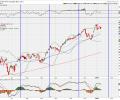
It is too early to say if we have seen the "final" bottom to these stocks in August 2013 or if another attempt to test them will be made before or just after elections, says Sonali Ranade.

'Earnings growth will be the main driver of India's market in 2026, with profits expected to rise 9% to 10% in H2 FY26 and accelerate to 12% to 15% in FY27.'

The rupee plunged 38 paise to close at an all-time low of 90.32 against the US dollar on Thursday amid uncertainty over the India-US trade deal. Forex traders said the rupee is expected to trade with a negative bias as the delay in the trade deal between India and the US may continue to dent investor confidence.

Falling for the fifth day in a row on Monday, equity benchmark BSE Sensex tumbled over 1 per cent to drop below the crucial 75,000 level, tracking a US market trend and unabated foreign fund outflows amid concerns over US tariffs. The 30-share BSE benchmark tanked 856.65 points or 1.14 per cent to settle at 74,454.41. During the day, it plummeted 923.62 points or 1.22 per cent to 74,387.44.

After withdrawing money on a net basis for the past three months, foreign portfolio investors (FPIs) have turned buyers with a Rs 6,480 crore investment in October so far, driven by strong macroeconomic factors.
